
Precoding in Preschool
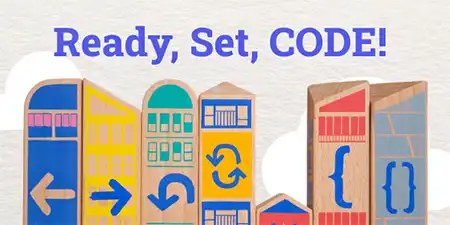
How Play Builds Early Problem-Solving Skills
When people hear the word coding, they often picture screens, apps, or lines of text scrolling across a computer. That image can feel far removed from preschool classrooms, where learning looks like block creations, pretend play, and lots of “try again” moments.
Here's the surprise: precoding is already happening in preschool classrooms every single day. Not through technology, but through play, routines, and problem solving that young children are naturally drawn to.
In early childhood, coding is about how we think, wonder, and work things out together.
What Precoding Means in Early Childhood
Precoding refers to the foundational thinking skills that children develop long before they ever encounter formal coding languages. These include:
- • Sequencing steps
- • Giving and following clear directions
- • Predicting outcomes
- • Noticing when something doesn’t work
- • Revising plans and trying again
These habits of mind are central to computational thinking, and they are deeply aligned with how young children learn best: through hands-on exploration, repetition, and play.
What Early Childhood Precoding Looks Like
Once you know what to look for, precoding becomes easy to spot.
1. Routines and Transitions
Preschool days are filled with familiar sequences like “first clean up, then come to the rug” or “after you wash your hands, please join us at the table for snack.” Every time children hear, track, and follow multi-step instructions, they are practicing sequencing and algorithms. Predictable routines help children understand order, cause and effect, and what comes next.
2. Block Play, Construction, and Outdoor Exploration 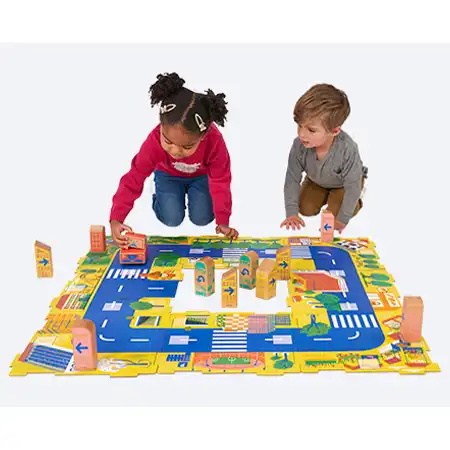
Building a road, a tower, or a moat in the sandbox requires planning, testing, and revising. When a structure falls and a child adjusts their approach, that’s debugging in action. Block play and construction opportunities are rich with early engineering and coding thinking.
3. “What Happens If…?” Moments
Any time children predict what might happen before trying something, they are engaging in computational thinking. Will the ramp make the car go faster? Will adding another block change the path? Teachers embed prompts for making predictions and testing ideas in play, activities, and conversations. These questions drive meaningful learning.
4. Trial, Error, and Trying Again 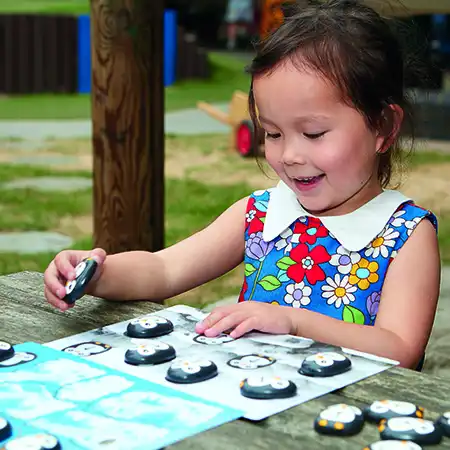
Mistakes aren’t setbacks in early coding. They’re data. Trial and error sits at the heart of precoding as children notice when something doesn’t work and try a new approach. You’ll see this when a child mixes paint at the easel to get just the right color, reshapes a play dough sculpture that keeps tipping over, or changes the angle of a crayon while making leaf rubbings. Each moment invites children to test an idea, observe what happens, and revise their plan. Again and again, they build persistence, flexibility, and real problem-solving skills.
5. Collaborative Play
When children plan together, negotiate roles, or agree on steps in a shared plan, they are learning how to communicate instructions and adapt ideas. You might see this when children decide who will build the bridge and who will drive the cars, plan their mud-kitchen restaurant, or work together on a collaborative art project. As plans shift, children revise together, offering new ideas and adjusting roles along the way. In early childhood, coding is often social, and these shared moments of planning, listening, and revising help children practice giving clear directions, responding to feedback, and solving problems together.
Why Naming Precoding Skills Matter
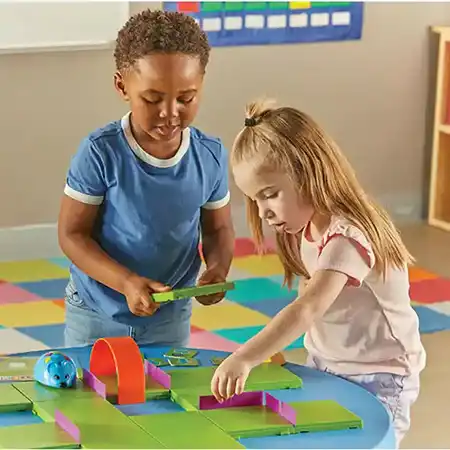
Educators have always supported these kinds of thinking skills but naming them matters. When teachers recognize pre-coding in everyday play, it becomes easier to:
- • Plan with intention
- • Advocate for play-based learning
- • Feel confident engaging in STEM conversations
- • Support children's growing problem-solving abilities
This isn’t about adding another check box to educators' to-do list or a documentation task. It's noticing, validating, and valuing what's already happening.
Keeping Precoding Educational Activities Developmentally Appropriate
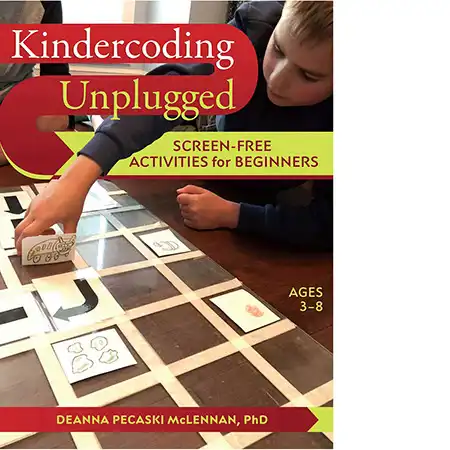
In preschool, children thrive when precoding is :
- • Hands-on
- • Embedded in play
- • Open-ended
- • Collaborative
- • Thoughtfully scaffolded
- • Flexible for diverse learners
When learning stays grounded in movement, materials, and social interaction, children can engage deeply without pressure or abstraction.
Precoding Grows from Childhood Play
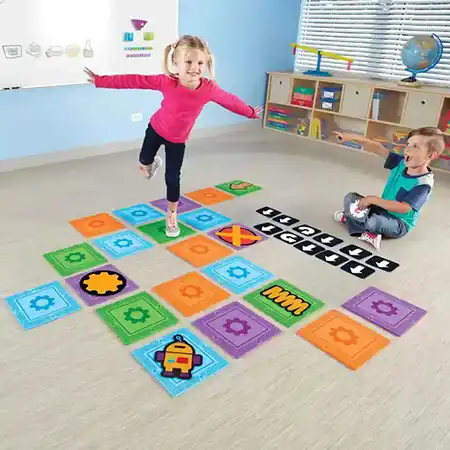
Preschoolers are natural problem solvers. They are curious, persistent, and eager to test ideas. Play gives them the space to practice sequencing, predicting, revising, and collaborating in ways that feel meaningful and joyful.
Pre-coding doesn’t need a special unit or a new label to be powerful. It thrives in block corners, routines, outdoor play, and the everyday moments that make preschool what it is.
The surprise isn’t that precoding belongs in early childhood.
The surprise is that it’s been there all along.

Christine Murray is an Early Learning Pedagogy and Product Lead with Becker’s Education Team.
As an educator, coach and leader, Christine is inspired by the curiosity, joy and wonder that children so generously model for us. She earned her M.A. in Innovative Early Childhood Education at the University of Colorado Denver and loves collaborating with and supporting others in the field. Grounded in relationships and guided by empathy, Christine is always learning, connecting and creating.